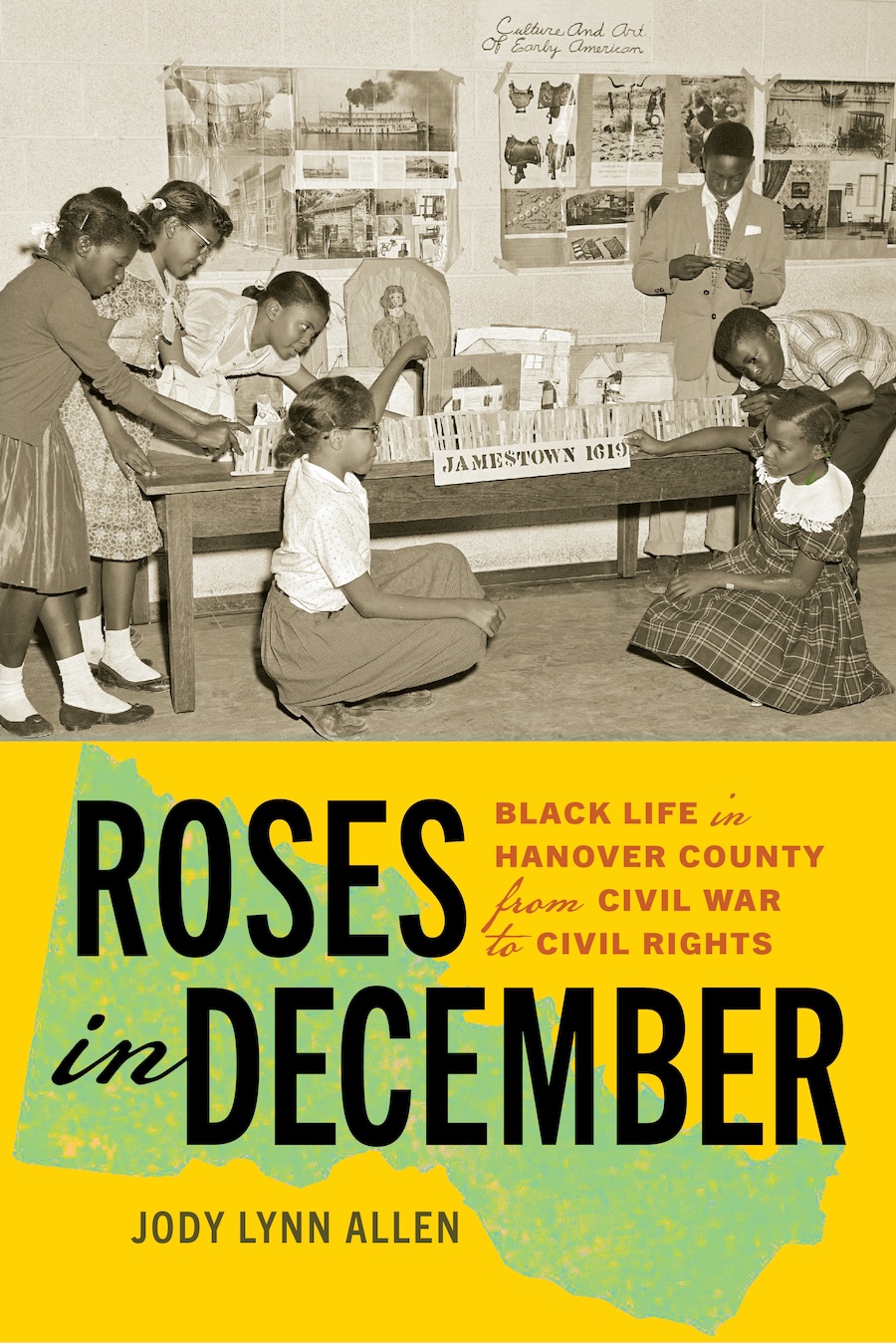
Roses in December
Black Life in Hanover County from Civil War to Civil Rights
Jody Lynn Allen
subjects:
The inspiring chronicle of a Black community in Virginia fighting for civil rights over the course of a pivotal century
Roses in December is a story of strength, courage, and beauty found in difficult times and the most challenging of circumstances. Beginning in the era of Reconstruction and ending with desegregation, Jody Lynn Allen chronicles the lives of newly freed people and their descendants in Hanover County, Virginia, providing an unprecedented look at rural Black Virginians’ resilience after disfranchisement. In the century between 1865 and 1965, Black residents of Hanover County embraced liberty as they organized for education, employment, and religious freedom, and built a community that flourished in the face of white retrenchment and day-to-day oppression. In this at times poignant, at times funny, and always powerful book, Allen’s attention to local, community level history offers an overlooked yet vital perspective of the civil rights movement in the rural South.
Never forget the generations of black folk whose courage and ingenuity carried their regions, and ultimately the nation, toward greater justice. Roses in December is a beautifully written and thoroughly researched portrait of African Americans in Hanover, Virginia, as they crafted and pursued their visions of a future without slavery, segregation, and racial inequality. This is a captivating account of how they made history.- Craig Steven Wilder, Barton L. Weller Professor of History, MIT
With her effective and original description of the Black Hanover County experience, Allen bridges the long Reconstruction and the civil rights movement, creating a cohesive and convincing narrative.- Hilary Green, Davidson College, author of Unforgettable Sacrifice: How Black Communities Remembered the Civil War
- Journal of Southern HistoryLinking current residents to the ancestors of the freedom generation, Allen reflects on the challenges that confront present-day Black Hanoverians, including land loss, as Black communities are overrun in the name of progress, the threat of historical erasure, and the persistence of pockets of racism. The strength of this work is its demonstration of how local narratives can be scaffolded onto the general historical narrative of the African American experience.
Jody Lynn Allen is Assistant Professor of History and Robert Francis Engs Director of the Lemon Project at William & Mary.

