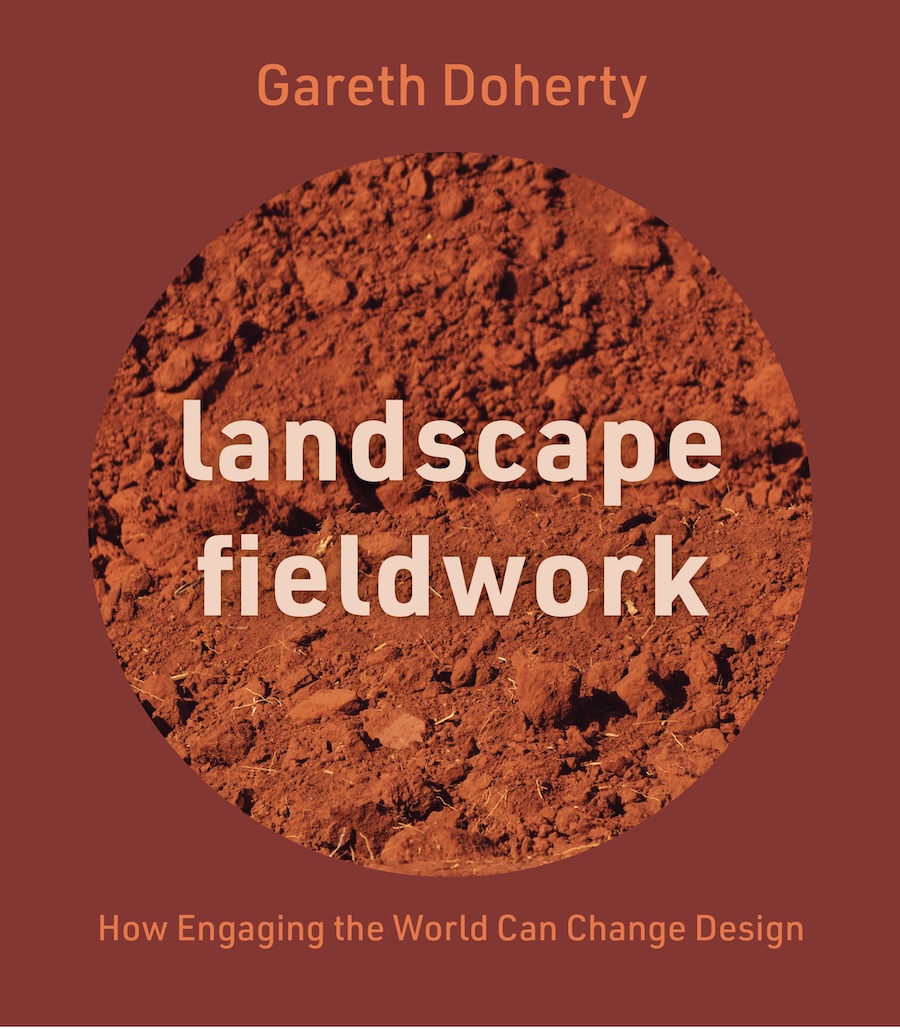
Landscape Fieldwork
Architectural Book Awards, (2026, Finalist)
Refocusing on human inhabitants in landscape architecture
Landscape architecture is at a crossroads. The ability to draw upon interdisciplinary perspectives and generate insights from the combined vantage points of design, environmental studies, and the social sciences puts it in a prime position to address the most pressing issues of our time, such as climate change and social inequality. Its current reliance on digital and technological solutions, however, has increasingly caused landscape architects to lose sight of the ways in which humans actually use spaces. And while landscapes are designed all over the world, the discipline remains inordinately centered on the Global North. Landscape Fieldwork alters that long-standing paradigm through real-life examples that provide tools for practitioners to engage more deeply with multidimensional, diverse landscapes and the communities that create, live in, and use them.
- Landscape Architecture FrontiersThe book thus stands not only as an essential text for Landscape Architecture, but also as a methodological and ethical guide for practitioners seeking grounding in an unstable world: only through the honesty of stepping barefoot onto the land and the patience of listening to all forms of life can we design communities, ways of living, and futures that do not impose themselves upon the earth, but grow from within it.
- PlacesLandscape Fieldwork makes a timely contribution. In an era of climate crisis and civic unraveling, Doherty’s invitation to linger feels urgent. To linger in the field is not an indulgence but a politics: what we choose to notice — weeds, rust, butterflies, bottles — shapes the worlds we imagine into being, and the futures we are willing to fight for.
A highly original and significant contribution to the field of landscape architecture.- Frederick Steiner, University of Pennsylvania, author of Making Plans: How to Engage with Landscape, Design, and the Urban Environment
Fieldwork is more than a method: it has the potential to generate knowledge and theories of site, and to unearth novel design challenges and solutions. Doherty's work covers a range of designed landscapes, design processes, and landscape practices across the globe and invites us to travel to sites around the postcolonial and Islamic world – including Western Europe, the Arabian Peninsula, the Caribbean, Brazil, and West Africa – helping to overcome the North American and Western European–centric nature of landscape architecture.- Albena Yaneva, Politecnico di Torino, author of Architecture After Covid
Champions the science of first-hand encounters, and thereby eschews our discipline’s reliance on reducted and interpreted secondary source mapping in the representation of landscape. Ethnographic fieldwork, Doherty suggests, is anthropology and landscape architecture working together, which explains the intertwined socio-ecological narrative. . . Work in the field of landscape architecture may be more expansive than it has ever been, but the ethnographic socio-ecological work in the field for landscape architecture still offers rich, novel and inspiring outcomes.- Landscape Review
- Journal of Landscape ArchitectureFor Doherty, the thick description that comes thorough field observations can yield thick prescription: conceptually rich, careful design propositions. The capacity to critically describe what is enables one to better imagine what could be.
Proposes a valuable theoretical and operational tool that illustrates the essential role of fieldwork in landscape architecture . . . Landscape Fieldwork describes a vital poetic-practice that allows us to develop new understandings, new theories and can help us to find out unconventional solutions to accompany the transformations of places and landscapes.- Architettura del Paesaggio
Engaging in landscape fieldwork grounds green infrastructure in the real world, making projects more effective, resilient, and responsive to both human and environmental needs. Written in an engaging narrative style, Doherty’s book is an invaluable resource that will shape the field for years to come.- Kongjian Yu, Founder, Turenscape, Professor and Dean, College of Architecture and Landscape, Peking University
- Dan Rose, University of Pennsylvania, Professor Emeritus, author of Black American Street LifeLandscape Fieldwork sets a clear direction for the future of landscape architecture. The field is more inclusive and more challenging due to Doherty’s meticulous and visionary work.
- African Journal of Landscape ArchitectureThis book is truly a valuable resource, one I wish I had had access to when I studied Landscape Architecture years ago . . . Landscape Fieldwork is a thought-provoking and insightful read that challenges landscape architects to rethink their approach to fieldwork. It underscores the importance of understanding landscapes in their full complexity and advocates for a more collaborative and interdisciplinary approach to design. . . The book offers practical tools and real-life examples for landscape architects to engage more deeply with diverse landscapes and the communities that create and use them.
- CHOICEDoherty’s framework for landscape fieldwork is articulated around four fundamental principles: mixing measures, immersing the body, contrasting media, and imagining critically. Salient milestones in the history of landscape architecture were built for the elite, a factor Doherty deems troubling. As an antidote, fieldwork is proposed as a means to engage the world and its complex diversity in the design process. Beyond suggesting a panoply of tools for landscape practitioners, this work's cultural and meticulously scholarly underpinning is enriching for all readers with an interest in landscape.
- Landscape Architecture MagazineDoherty advocates for immersive engagement in the field to interact with the social, cultural, and aesthetic properties of a place.

