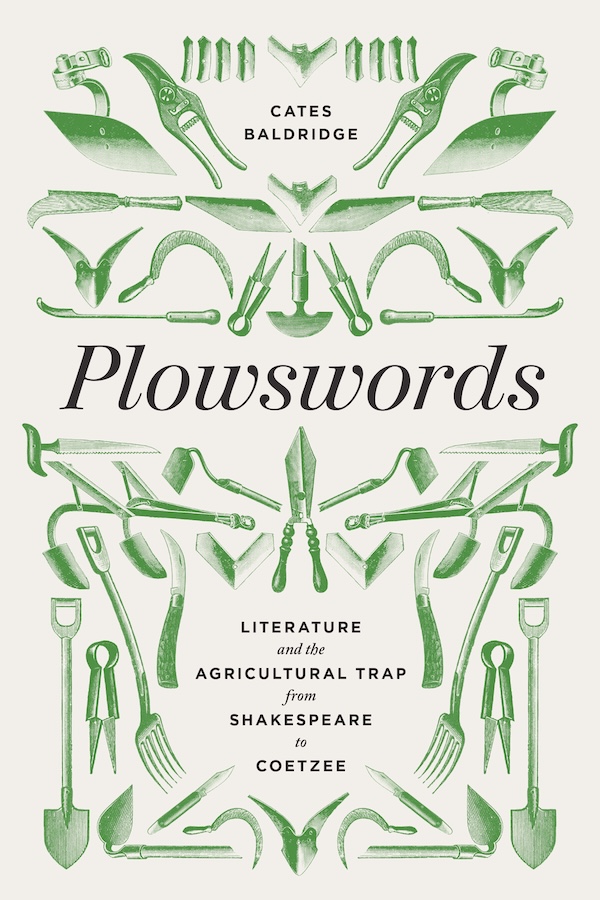
Plowswords
Literature and the Agricultural Trap from Shakespeare to Coetzee
Cates Baldridge
subjects:
A critical examination of the ‘agricultural trap’ in literature
For thousands of years, agriculture and civilization were essentially synonymous. The superiority of farming over the unsettled, itinerant life of hunting and gathering appeared, to many, self-evident. Only recently has the field of anthropology challenged this assumption by positing that foragers were, and are, actually happier and healthier than people living in agro-cultures. Plowswords is the first work to consider the refiguring of the agricultural revolution into the agricultural trap through a literary lens. Reading texts that depict farmers in conflict with foragers, Cates Baldridge argues that agricultural ideology justified the tedium and toil of farming by enlisting a rhetorical foil: the “savage” and “backward” hunter-gatherer. Texts such as The Tempest, Robinson Crusoe, Frankenstein, Wuthering Heights, Heart of Darkness, and the novels of J. M. Coetzee use this figure either to exalt farming’s triumph over foraging or to mourn the consequences of the agricultural turn, anxiously championing or stridently challenging the received wisdom of humanity’s supposed progress.
Plowswords is exceedingly original in its subject and scope, and the writing is engaging and elegant. Revisiting the history of how the ‘agricultural revolution’ became the ‘agricultural trap’ is very timely. This is the first work of literary criticism on the subject.- Kathryn Cornell Dolan, Missouri University of Science and Technology, author of Breakfast Cereal: A Global History
- H-EnvironmentConsistently illuminating and beautifully written . . . The close readings are marvelous, often dazzling. Deeply read in the voluminous scholarly conversation that attends all of these authors, Baldridge expertly shows how us how focusing on agriculturalist ideology as an ideology can bring out new features and pressure points in these texts . . . Baldridge is a marvelous writer—witty at times, elegant at others, everywhere lucid, precise, and compelling. I’ve noted already its promise for ecocritical scholarship across a range of periods, but I also think the clarity and directness with which Plowswords delivers its challenge to many unexamined assumptions will make it a provocative and valuable text for both the graduate and undergraduate classrooms.
Cates Baldridge is Philip Battell and Sarah F. Cowles Stewart Professor of English at Middlebury College and the author of The Dialogics of Dissent in the English Novel.
Acknowledgments
Introduction: Foraging for Happiness
1. The Farm Implements of War
2. Sowing the Seeds of Our Discontent
3. Shelley’s and Brontë’s Solitary Walkers
4. Coetzee’s Carcer[e]al State
5. The Necessity of Cannibalism
6. What Walls Want
Conclusion: The Timescales Fall from Our Eyes
Notes
Works Cited
Index
Introduction: Foraging for Happiness
1. The Farm Implements of War
2. Sowing the Seeds of Our Discontent
3. Shelley’s and Brontë’s Solitary Walkers
4. Coetzee’s Carcer[e]al State
5. The Necessity of Cannibalism
6. What Walls Want
Conclusion: The Timescales Fall from Our Eyes
Notes
Works Cited
Index

