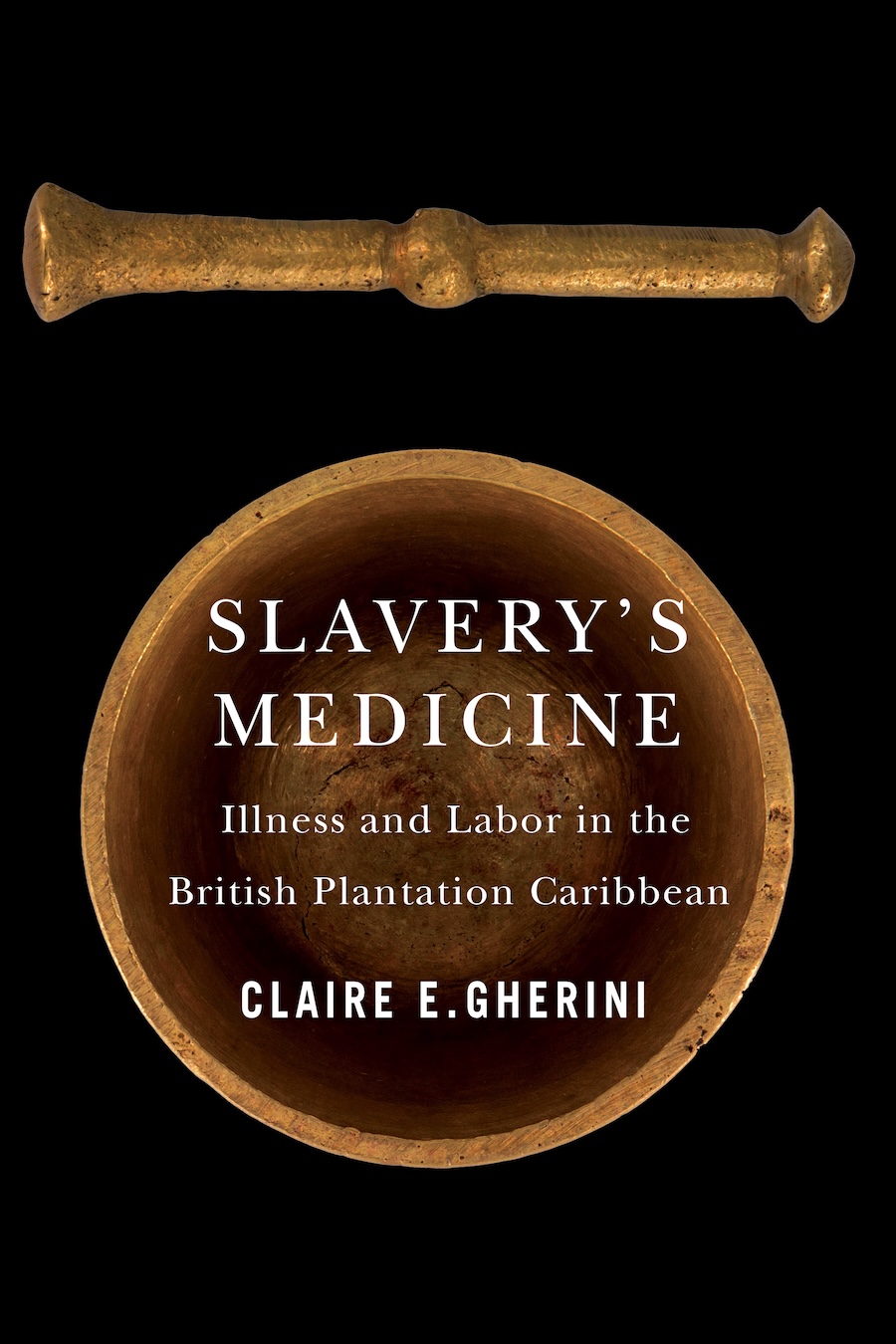
Slavery's Medicine
Healthcare and hierarchy in Caribbean plantation slavery
From their inception, British Caribbean sugar plantations generated wealth on the basis of nightmarish systems of labor exploitation, where illness was a constant of enslaved life. Then, in the second half of the eighteenth century, plantation owners tried to “improve” plantation slavery, targeting medicine and healing. But rather than improve rates of illness, they sought instead to make the work of medicine and care more economically predictable and efficient and to hurry the sick back to work. Healthcare became an arena for contests for power, as people struggled with one another over the terms of their work and how they recovered from illness. Slavery's Medicine uses a rich and substantial archival base to document the experiences of the sick, managers, doctors, absentee plantation owners, enslaved healers, and medical advice authors in this new, modern system of body management. Modern medicine ultimately sustained hierarchies among enslaved people and middling whites. Yet modern medicine also encouraged acts of resistance. It was, therefore, the creation of proprietors as well as enslaved men and women themselves.
Slavery's Medicine uses an incredibly rich and substantial amount of archival information to document how overseers, bookkeepers, plantation owners, free people of color, local and metropolitan politicians, and European audiences all took part in the transformation of care (or lack thereof) for enslaved people. Gherini demonstrates, in ways that previous studies have not, that plantation medicine actually constituted a series of complicated, negotiated relationships that went beyond a simple interaction between Western-trained doctors and the enslaved. It builds successfully off of previous scholarship on plantation medicine while also offering new interpretations and ideas to consider.- Daniel Livesay, Claremont McKenna College, author of Children of Uncertain Fortune: Mixed-Race Jamaicans in Britain and the Atlantic Family, 1733-1833
- CHOICE[A] deeply researched and original work.
- H-Early-AmericaSlavery’s Medicine: Illness and Labor in the British Plantation Caribbean by Claire Gherini is a compelling and elegantly written exploration of plantation healthcare practices that places enslaved people and developments in the work of medicine at its core. Gherini draws on a wide range of well-known source material about British Caribbean slavery, ranging from medical journals, plantation management manuals, and scientific correspondence to personal diaries, and in doing so reconstructs the everyday workings of healthcare on slave plantations. Her analysis of these sources reveals plantation medicine in the late eighteenth century to early nineteenth century not as a benevolent response to slavery’s innate violence and brutality, but as a key component of the labor regime itself.

