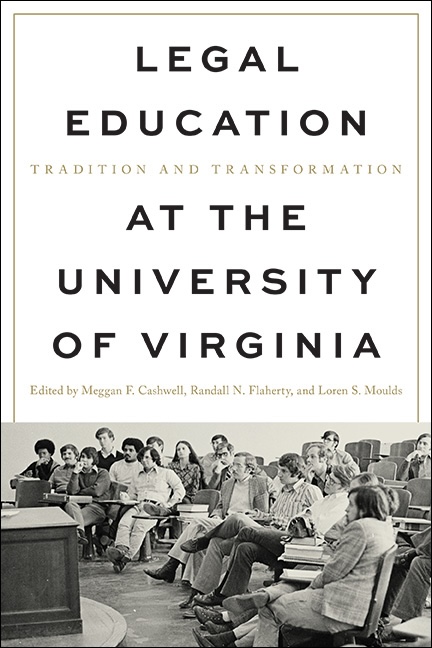
Legal Education at the University of Virginia
Tracing the material and intellectual development of one of the nation’s leading law schools
Over two centuries, UVA Law evolved from a regional, segregated law school into a nationally recognized leader in legal education. As this collection highlights, its changing curriculum—always in conversation with broader historical, cultural, and social forces—proved crucial to this profound transformation. Initially shaped by white Southern perspectives on race, gender, and states’ rights, UVA Law grew beyond its early identity through the inclusion of new voices in both its faculty and its student body. By examining the complex interplay between the school’s institutional mission, its educational program, and its social context, the contributors offer a comprehensive view of how UVA Law has adapted to meet the demands of legal education in a changing world.
A wonderful collection of essays that offer both an intellectual history of southern legal education and a material history of UVA law school. Informed by the school’s rich archives, contributors investigate who was included, who belonged, and who dominated the spaces reserved for legal education at the preeminent school in the South.- Kellen R. Funk, Columbia Law School, author of Law's Machinery: Reforming the Craft of Lawyering in America's Industrial Age
- William LaPiana, Dean of Faculty, New York Law School, author of Logic and Experience: The Origins of Modern American Legal EducationThe subtitle of Legal Education at the University of Virigina: Tradition and Transformation is a perfect summary of the history told through this collection of essays on the long history of UVA’s law school. And it is only right that the history of an institution founded by one of the founders of our republic is a history far more wide-ranging than the ins and outs of pedagogy and personnel, as important as those subjects are. Founded in the conviction that a well-formed legal profession is critical to the success of the American experiment, the Law School’s own development over two centuries is also a story of the development of our polity, from founding, through civil war, to the sweeping changes of the post-World War II era.
The essays in this volume turn an unflinchingly honest gaze on all the aspects of the Law School’s development. They exemplify the worth of rigorously honest examination of the sources and clear recounting of what those sources tell us. It is truly a history for our times.

