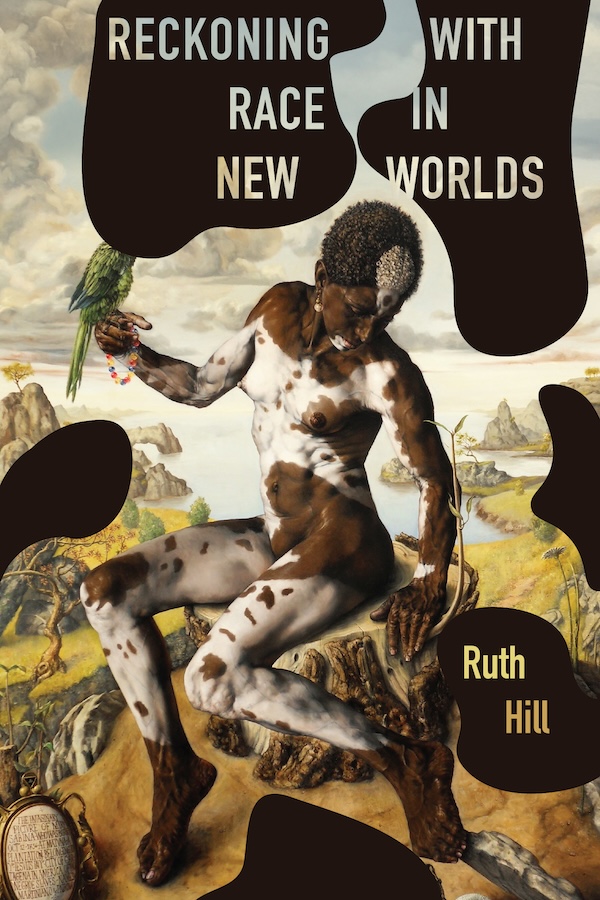
Reckoning with Race in New Worlds
Ruth Hill
Series:
How Spanish and Portuguese colonialism shaped our conception of whiteness
A landmark treatment of a pivotal historical question, Reckoning with Race in New Worlds reveals how the empires of Spain and Portugal debated and came to determine who was white and who was not during their colonial era. How did free people with partial Native American, Asian, or African lineage either become or cease to be blancos or brancos—white people? Ruth Hill explains how, in unexpected ways, science and religion joined forces in the early modern era to shape the concepts of purity, mixture, and degeneration that would decide these questions. Fixing the thresholds of whiteness—degrees of blood, generations spent in a foreign environment—instigated centuries-long controversies with enormous consequences. By putting into dialogue archival sources as well as extensive engagement with secondary literature, paintings, and maps, Reckoning with Race in New Worlds crafts a history of human diversity in the colonial era, with profound implications for our understandings of the natural and social sciences and of our racial present.
- Neil Safier, Brown University, author of Measuring the New World: Enlightenment Science and South AmericaSeeking to understand the complex racial dynamics of the Americas with a panoply of analytical tools ranging from organic fibers to religious rhetoric, Ruth Hill has alighted upon degeneration as a semantic, biological, and hierarchical shorthand for this process, arguing that today’s understanding of race has buried a richer, more complex genealogy that understands racial classifications – including blancos, pardos, mestizos, and mulatos – as categories ever under construction, fluctuating with meaning and signification throughout the colonial period. By eschewing the idea that corporeal identities were fixed and fatalistic, Hill adds nuance and subtlety to pre-Darwinian ideas of diversity as she expansively interprets the archive of racial thinking to include adages and animals alongside leprosy and moral philosophy. From Spanish and Portuguese America to the British Caribbean, from Benito Jerónimo Feijóo to Benjamin Rush, Reckoning with Race in New Worlds is an essential and comprehensive account of how eighteenth-century racial concepts came to be created across a stunning array of geographies, doctrines, and disciplines.
The most comprehensive, in-depth, competent, and significant study of the history of the concept of race before Darwin. Its historical reach and multilingual archival breadth are encyclopedic; its scholarly erudition and cross-disciplinary exigence are nothing short of breathtaking.- Ralph Bauer, University of Maryland, author of The Alchemy of Conquest: Science, Religion, and the Secrets of the New World
Ruth Hill is Professor of Spanish and Andrew W. Mellon Chair in the Humanities at Vanderbilt University and the author of Sceptres and Sciences in the Spains: Four Humanists and the New Philosophy (ca. 1680–1740).

