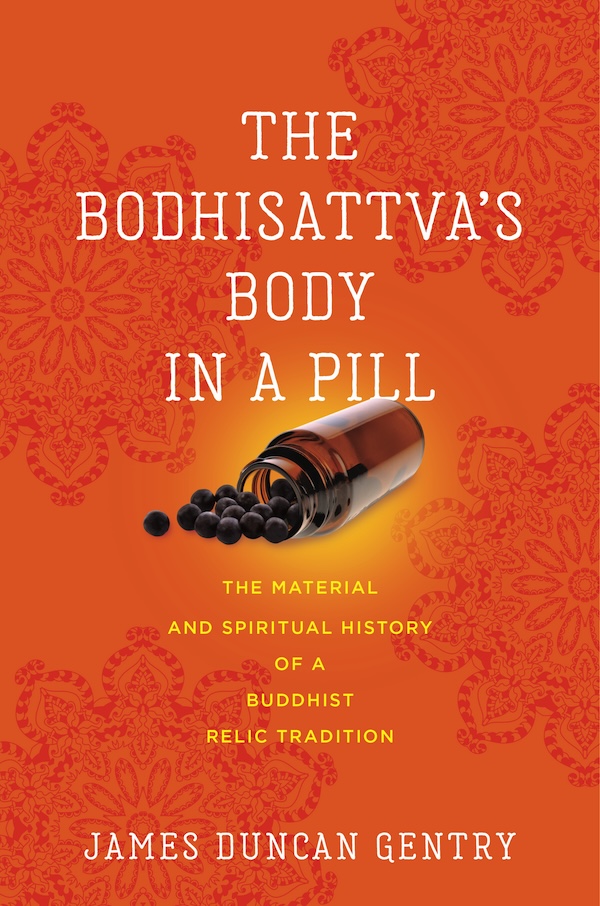
The Bodhisattva’s Body in a Pill
The Material and Spiritual History of a Buddhist Relic Tradition
James Duncan Gentry
subjects:
The first historical study of the medicinal mani pill and its profound spiritual significance in Tibetan religion and culture
The maṇi pill is one of the most popular relic traditions in Tibetan Buddhism. Treasured around the globe, maṇi pills are small edible pellets formed from mixing the powdered bodily remains of buddhas and bodhisattvas with ingredients used in Tibetan medicine and sanctified through a tantric liturgy. Maṇi pills are today predominantly produced by the Fourteenth Dalai Lama Tenzin Gyatso, who consecrates and distributes hundreds of thousands annually, but the tradition of producing and consuming maṇi pills stretches back more than a millennium.
Examining the broad cultural history of Buddhist tantra in Tibet through the lens of the maṇi pill, James Gentry illustrates how these pills have influenced Tibetan conceptions of the body, medicine, healing, collective identity, and shared past; how they have functioned as a point of interaction, contestation, and negotiation between different Buddhist sects and institutions; and how they have created and shaped social bonds and religious identity across Tibet and beyond to the present day.
A major contribution to the fields of Tibetan Studies, Buddhist Studies, and Religious Studies. Gentry's book is an innovative and philologically thorough exploration of the controversial and important topic of anthropophagy with the potential to transform our understanding of Tibetan history and Tantric Buddhism.- William A. McGrath, New York University, editor of Knowledge and Context in Tibetan Medicine
Hands-down the best book on Tibetan Buddhism in a decade. Gentry produces innumerable insights into not just Tibetan history but the contours of how Tibetan Buddhism really works. What emerges is a picture of Tibetan treasure revelation unmatched in its rich detail.- Jacob Dalton, University of California, Berkeley, author of Conjuring the Buddha: Ritual Manuals in Early Tantric Buddhism
James Duncan Gentry is Assistant Professor of Religious Studies at Stanford University and the author of Power Objects in Tibetan Buddhism: The Life, Writings, and Legacy of Sokdokpa Lodrö Gyeltsen.

