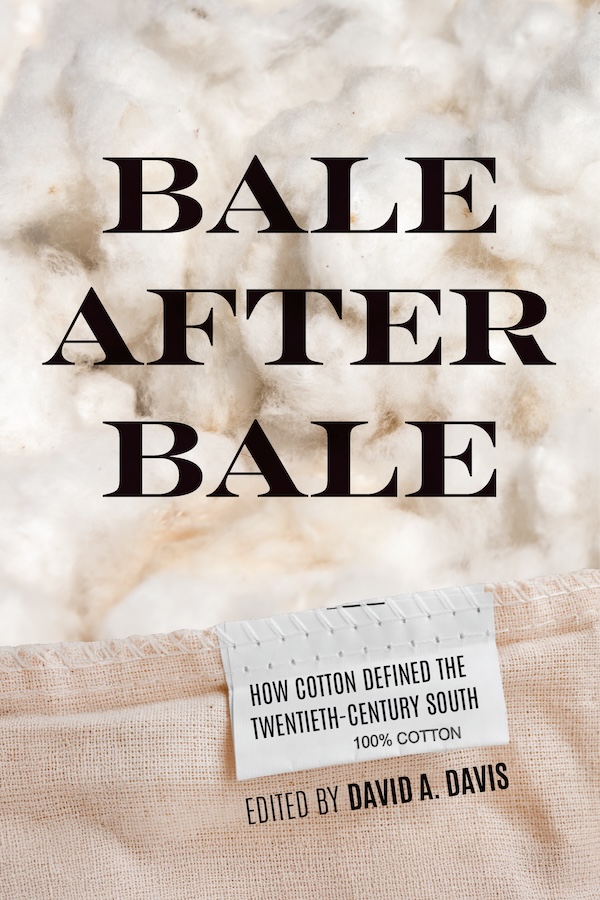
Bale After Bale
From the cotton boll to the Cotton Bowl in modern American culture
There are few places on earth as thoroughly identified with a crop as the American South is with cotton. Burgundy is known for wine, and Java has coffee. In the South, for most of its history, cotton was king. Through much of the twentieth century, cotton cultivation determined nearly every aspect of life in the region. In Bale After Bale, leading historians and cultural critics offer multifaceted examinations and multimedia approaches to understanding the place of cotton in the twentieth-century South.
The essays in this collection examine the history of the hands that picked and processed cotton, the communities who celebrated cotton, the unions who organized cotton workers, the connections between cotton farmers in the South and banana farmers in Latin America, the portrayal of cotton in Faulkner’s Yoknapatawpha County, the poems and songs of the boll weevil, the role of cotton in blues music, the depiction of cotton on the silver screen, and the memories of people displaced by mechanical cotton pickers. As these essays demonstrate, understanding the nature of cotton’s persistence into the twentieth century and the decline of the cotton economy are crucial to understanding the contemporary South and today’s United States.
- Anna Arabindan-Kesson, Princeton University, author of Black Bodies, White Gold: Art, Cotton and Commerce in the Atlantic WorldThe range of essays in this volume bring together a variety of understudied sources and archives that illuminate how cotton and its cultures mediated the lived experience of communities in the US South across the twentieth century. Threading together the sensory, literary, visual and political economies that cotton sustained in the twentieth century, the book offers important analytical methods that take us beyond readings of cotton's symbolic meanings to materializing its impact on relations of power, practices of labor, and forms of cultural production in the region, and by extension, the nation.
- Sven Beckert, Harvard University, author of Empire of Cotton: A Global HistoryHere is a book that finally takes the study of cotton and the South into the twentieth century. We encounter a plantation landscape in which the relentless exploitation of African American workers continued to be foundational to producing industrial modernity. David A. Davis’ superb collection reveals a society of grave inequalities and deep poverty, but also a rich culture of resistance and survival. These important essays sparkle with fresh insights, and they remind us that the inequalities of the present are also rooted in the violent injustices of a very recent past.
David A. Davis is Professor of English at Mercer University and the author of Driven to the Field: Sharecropping and Southern Literature.

