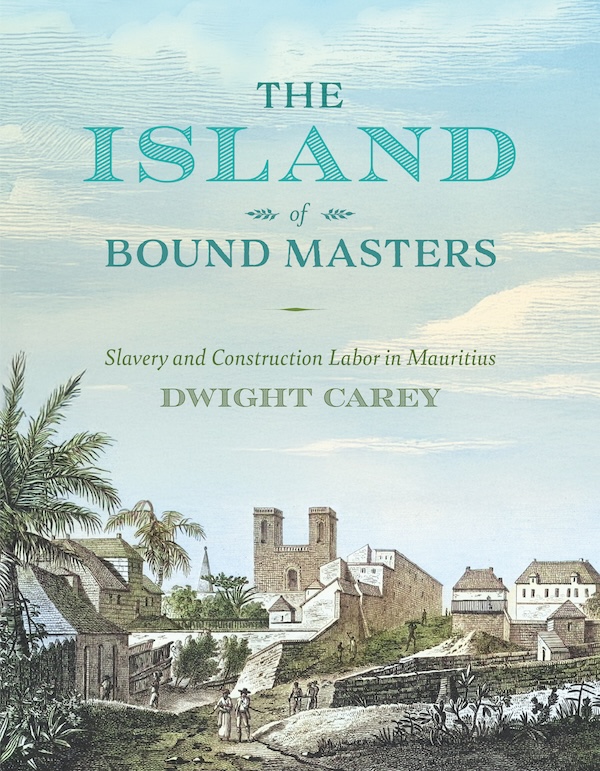
The Island of Bound Masters
Slavery and Construction Labor in Mauritius
Dwight Carey
Series:
How enslaved workers provided the labor as well as the architectural expertise needed to build and sustain Mauritius
Unlike most other sites of European colonialism, the Indian Ocean island of Mauritius had no indigenous population when the French set out to incorporate it into their imperial network. How, then, did its development differ from other colonial enterprises? And what lessons does that story hold? The Island of Bound Masters is an innovative and multifaceted history of the enslaved Africans and Indians who turned local basalt, coral, earth, and wood into economically viable built environments on Mauritius in the eighteenth and nineteenth centuries.
Dwight Carey shows how the labor and the ecological building knowledge of enslaved workers from overseas transformed the island’s terrestrial resources into functional domestic infrastructure and a commercial architecture that ensured the subsequent rise of a successful multicultural society. This groundbreaking book draws upon laboratory analyses of structural and ecological remnants, archival research, and insights from geological and botanical science. Its interdisciplinary approach captures the essence of the intangible heritage of Mauritius and reveals how the enslaved sustained life through the strength of their ecological knowledge and the force of their labor.
- Omar Ali, UNC Greensboro, author of Malik Ambar: Power and Slavery across the Indian OceanCarey offers a brilliantly developed history of Mauritius through a highly innovative approach that draws on archival research, archeology, material science, and oral history. This thoughtful interdisciplinary study, highlighting the expertise of enslaved Africans and their descendants, is like no other in its depth and serves as a model for the study of the scientific and architectural achievements of Black people across the globe in the making of the modern world
- Mark Hauser, Northwestern University, author of Mapping Water in Dominica: Enslavement and Environment Under ColonialismA fascinating and original book that uses architectural evidence to recover reconstruction techniques and document the situated knowledge of workers on Mauritius. Carey does an excellent job integrating natural and environmental science with the historical literature on slavery and his own archival spadework. The result is an excellent study that cuts across a number of fields.
Dwight Carey is Assistant Professor of Art and Art History at Amherst College.

