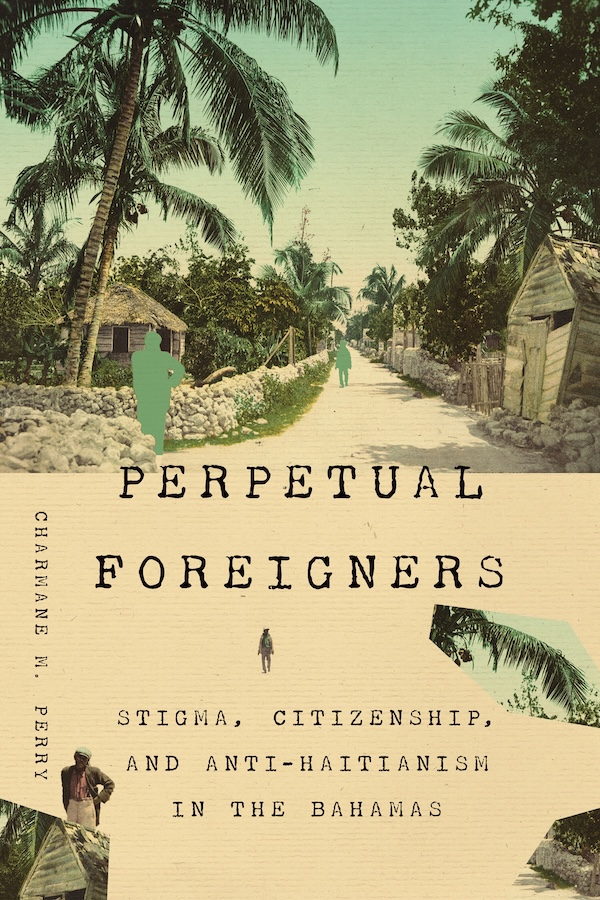
Perpetual Foreigners
The historical roots and contemporary experience of anti-Haitian discrimination in The Bahamas
Anti-Haitianism is deeply ingrained in The Bahamas—a multifaceted web of exclusion and hostility that bars the descendants of Haitian migrants from belonging and inclusion in the country of their birth. Tracing the legacy of anti-Black and anti-French British colonialism, Perpetual Foreigners argues that this entrenched antipathy pervades Bahamian institutions and has resulted in multiple generations’ worth of de facto statelessness for Haitian migrants and their children.
After The Bahamas achieved independence from Great Britain in 1973, resident Haitians served as a cultural foil, representing the antithesis of what it means to be Bahamian. Examining the everyday acts of discrimination, xenophobia, and social stigmatization suffered by these “perpetual foreigners,” Perry argues that anti-Haitianism has come to function as a form of Bahamian nationalism. This study offers critical insight into the ways anti-Haitian discrimination operates in Black-made spaces populated by majority Black people within a Black nation.
- Llana Barber, University of Minnesota, author of Latino City: Immigration and Urban Crisis in Lawrence, Massachusetts, 1945-2000A striking exploration of Bahamian national identity and an important book. Perry deftly centers the experiences of Bahamians of Haitian descent to make an original and substantial contribution to the field and paint a powerful portrait of their efforts to claim a place for themselves within the imagined nation.
Charmane M. Perry is Associate Professor of Africana Studies at San Diego State University.

