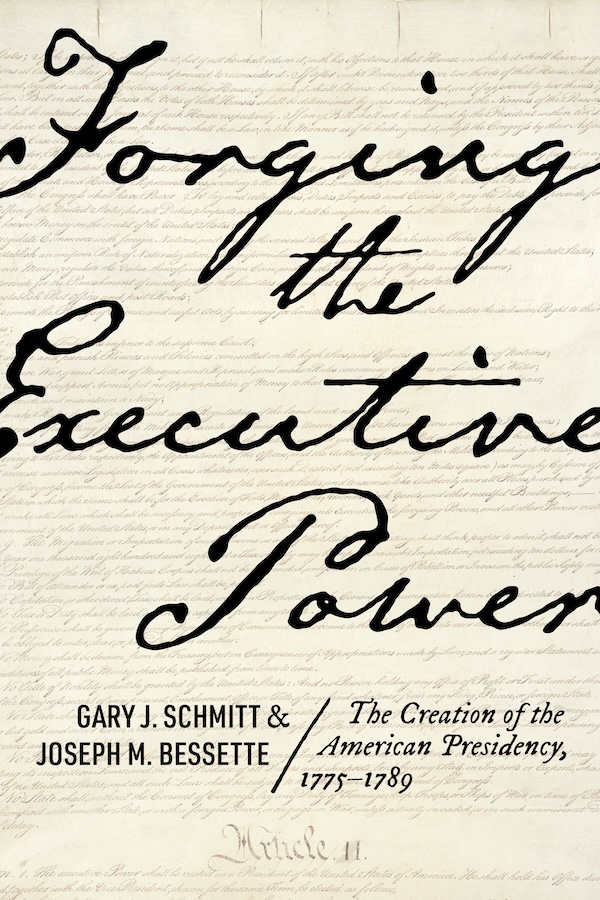
Forging the Executive Power
How the founding generation came to craft the American presidency
Amid growing controversies about the nature and reach of executive power, it is essential to re-examine the roots of the presidency: its purposes, powers and duties, institutional design, and its proper place within the republic. Forging the Executive Power offers a comprehensive account of the creation of the American presidency, from 1775, when war with Great Britain began, through 1789, when George Washington took the oath of office.
Gary Schmitt and Joseph Bessette explain how the founding generation moved from regarding executive power as a danger to Americans’ liberties to embracing the view that an effective chief executive would perform an essential role in responsible government. They examine in detail the insufficiencies of the state governors; the failure of the Articles of Confederation to provide for an effective national executive; how the Constitutional Convention institutionalized these lessons; how the ratification debate of 1787-88 sheds light on the ineradicable tension between a strong executive and republican principles, and conclude with an account of the key precedents set by George Washington as the first holder of the nation’s highest office.
- Jeffrey K. Tulis, author of The Rhetorical PresidencyA superb book. It offers a detailed political history of the making of the presidency from the point of view of framers who would take responsibility for the problems and failures of executive power in the colonies, in the states, and in the Confederation government that preceded the Constitution. This will become a classic resource for scholars of executive power.
Gary J. Schmitt is Senior Fellow in the Social, Cultural, and Constitutional Studies program at the American Enterprise Institute. Joseph M. Bessette is the Alice Tweed Tuohy Professor Emeritus of Government and Ethics at Claremont McKenna College.

