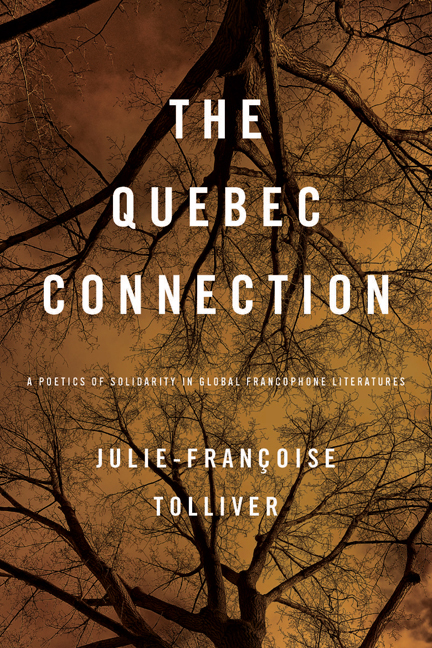
The Quebec Connection
From the 1950s to the 1970s, the idea of independence inspired radical changes across the French-speaking world. In The Quebec Connection, Julie-Françoise Tolliver examines the links and parallels that writers from Quebec, the Caribbean, and Africa imagined to unite that world, illuminating the tropes they used to articulate solidarities across the race and class differences that marked their experience. Tolliver argues that the French tongue both enabled and delimited connections between these writers, restricting their potential with the language’s own imperial history. The literary map that emerges demonstrates the plurality of French-language literatures, going beyond the concept of a single, unitary francophone literature to appreciate the profuse range of imaginaries connected by solidary texts that hoped for transformative independence.
Importantly, the book expands the "francophone" framework by connecting African and Caribbean literatures to Québécois literature, attending to their interactions while recognizing their particularities. The Quebec Connection’s analysis of transnational francophone solidarities radically alters the field of francophone studies by redressing the racial logic that isolates the northern province from what has come to be called the postcolonial world.
- Nick Nesbitt, Princeton University, author of Caribbean Critique: Antillean Critical Theory from Toussaint to GlissantTheoretically sophisticated and packed with novel insights, The Quebec Connection is a captivating investigation of the rhetorical tropes of the francophone literature of decolonization.
- Lydie E. Moudileno, University of Southern California, author of Postcolonial Realms of Memory: Signs and Symbols in Modern FranceOutstanding archival research grounds Tolliver's compelling insights into the literary history of the French-speaking world. The call to replace Quebec and Quebecois writers in a wider geography of global networks and intellectual exchanges truly opens up new perspectives for transnational Francophone studies.
- Cameron Cook · Research in African Literatures[A]deptly examines how Quebecois writers turned to Africa and the Caribbean to express solidarity in the struggle for independence…intelligently rethinks the relationship between Quebec and other parts of the French-speaking world. Tolliver’s book is one that I undoubtedly recommend.
Julie-Françoise Tolliver is Associate Professor of English and Comparative Literature at the University of Oklahoma.
Introduction: Toward a Francophone Poetics of Solidarity
1. "Interior Geographies": Solidary Locations of Aimé Césaire’s Poetics
2. Interlace, Interrace: Anticolonialism and White Babies in Hubert Aquin’s Trou de mémoire
3. Publishable Offense: Simile, Solidarity, and Mongo Beti’s Quebecois Main basse sur le Cameroun
4. As through a Canadian Fog: Mort au Canada and Other Moroccan Mysteries
Coda: Francophone Nostalgias and the Afterlives of Independence-Era Solidarity
Notes
Bibliography
Index

