After Emancipation
Assessing a university’s legacy in the age of segregation
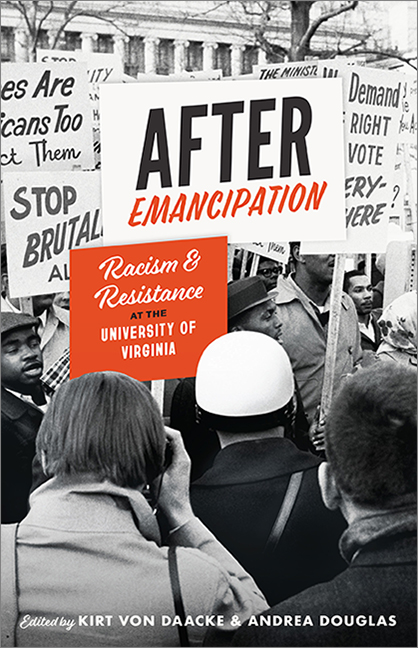
This anthology reckons with the University of Virginia’s post-emancipation history of racial exploitation. Its fifteen essays highlight the many forms of marginalization and domination at Virginia’s once all-white flagship university to uncover the patriarchal, nativist, and elitist assumptions that shaped university culture through the late nineteenth century and well into the twentieth. Including community responses ranging from personal reflections to interviews with local leaders to poems, this accessible volume will be essential reading for anyone with ties to UVA or to Charlottesville, as well as for anyone concerned with the legacy of slavery and segregation in America’s universities.
- The Journal of Southern HistoryIf students read only one book about the long shadow of enslavement on southern universities, After Emancipation: Racism and Resistance at the University of Virginia should be it.
A powerful, interconnected, interactive narrative that models effective truth-telling about complex public history through the inclusion of a multiplicity of voices and perspectives.- Rhondda Robinson Thomas, Clemson University, author of Call My Name, Clemson: Documenting the Black Experience in an American University Community
An important piece of the puzzle and a necessary innovation in publishing on higher education’s formative role in building a nation founded on white supremacy in the century and more after emancipation.- Woody Register, University of the South, director of the Roberson Project on Slavery, Race, and Reconciliation
- The Journal of the Civil War EraContributing to the burgeoning field of critical university and college studies, the editors of After Emancipation curate a form of truth-telling of the University of Virginia's institutional past . . . By embracing a call-and-response format, the editors create a space where diverse respondents reveal a history of resistance, resilience, and activism. Collectively, the essays and critical responses offer a corrective not only for UVA, but also for other institutions of higher education as well as for Civil War–era studies exploring the postemancipation United States.

