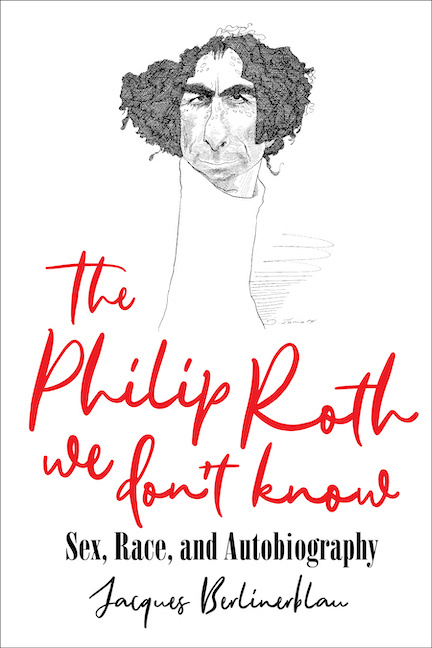
The Philip Roth We Don't Know
Sex, Race, and Autobiography
Jacques Berlinerblau
subjects:
Let it be said, Philip Roth was never uncontroversial. From his first book, Roth scandalized literary society as he questioned Jewish identity and sexual politics in postwar America. Scrutiny and fierce rebukes of the renowned author, for everything from chauvinism to anti-Semitism, followed him his entire career. But the public discussions of race and gender and the role of personal history in fiction have deepened in the new millennium. In his latest book, Jacques Berlinerblau offers a critical new perspective on Roth’s work by exploring it in the era of autofiction, highly charged racial reckonings, and the #MeToo movement.
The Philip Roth We Don’t Know poses provocative new questions about the author of Portnoy’s Complaint, The Human Stain, and the Zuckerman trilogy first by revisiting the long-running argument about Roth’s misogyny within the context of #MeToo, considering the most current perceptions of artists accused of sexual impropriety and the works they create, and so resituating the Roth debates. Berlinerblau also examines Roth’s work in the context of race, revealing how it often trafficked in stereotypes, and explores Roth’s six-decade preoccupation with unstable selves, questioning how this fictional emphasis on fractured personalities may speak to the author’s own mental state. Throughout, Berlinerblau confronts the critics of Roth —as well as his defenders, many of whom were uncritical friends of the famous author—arguing that the man taught us all to doubt "pastorals," whether in life or in our intellectual discourse.
- Kirkus Reviews[A] fresh account of the literary legacy of the award-winning and controversial author.... Intriguing new perspectives on a contentious writer.
- Jessica Lang, Baruch College of CUNY, author of Textual Silence: Unreadability and the HolocaustDespite long-standing attention paid Roth by literary critics, theorists, and commentators, The Philip Roth We Don’t Know is a startlingly refreshing and astoundingly comprehensive intervention in the field known as Roth studies. Berlinerblau asks that we take the long view, one that is rich in nuance, vigorous in its attention to broader trends and experiences, and one that doesn’t shy away from asking difficult, challenging, and even painful questions.
- Aimee Pozorski, Central Connecticut State UniversityProvocative and original, The Philip Roth We Don’t Know interrogates the life and works of Roth in light of the #MeToo movement and, in so doing, provides a contemporary context for discussing Roth during these changing times.
- Publishers WeeklyBerlinerblau’s method of reverse biography is fascinating.
- ForwardThe Philip Roth We Don’t Know is not so much reverse biography as a forward-looking argument. It affirms the enduring value of an astonishingly inventive author even Gen Z can know and admire.
- The GuardianBerlinerblau, of Georgetown University, Washington, who has published papers on Roth and lectured on his work for three decades, said: 'The thing I learnt about Roth in looking through this material is how much time he spent networking, scratching people’s backs, placing his people in positions, voting for them.'... Ultimately, Berlinerblau said, it is all the more surprising because Roth was such 'a magnificent writer.'
- Library JournalThere is a definite need for a book that grapples with Roth’s reputation in the #MeToo era. A literary figure of towering repute and prodigious output, Roth wrote books that constantly portrayed toxic masculinity, the male gaze, date rape, and emotional, physical, and sexual abuse.... [T]here is a ready market for a book pondering why he still matters.
- Jewish Book Council[A] thoughtful, timely exploration by Jacques Berlinerblau. In The Philip Roth We Don’t Know, he attempts to X‑ray Roth’s fiction while assessing his legacy. Will Roth’s reputation survive #MeToo? Should it? To answer, Berlinerbau reads Roth forensically. His project is simple yet ambitious: reading Roth rigorously and mapping his obsessions.
- Studies in American Jewish LiteratureBerlinerblau introduces readers to an intriguing theme: what happens to a writer’s legacy when his output runs headlong into a worldwide social movement? Part of what makes this book exciting for readers, no matter where one sits on the Philip Roth fan/critic spectrum, is that it addresses a question that has yet to be answered.
Jacques Berlinerblau is Rabbi Harold White Professor of Jewish Civilization at Georgetown University and author most recently of Campus Confidential: How College Works, or Doesn’t, for Professors, Parents, and Students.
Introduction: Art Is Slimy/Reverse Biography
1. Roth and Race
2. Old Men, Young Women
3. Misogyny and Autobiography
4. Before We Conclude That Roth’s Fiction Is Misogynistic
5. You Must Change Your Life!
6. Go Flux Your Self ! Philip Roth as Self-Help Guru
7. Fiction Is Truth! (Right?)
Conclusion: Philip Roth’s Legacy
Acknowledgments
List of Abbreviations
Appendix
Notes
Works Cited
Index
1. Roth and Race
2. Old Men, Young Women
3. Misogyny and Autobiography
4. Before We Conclude That Roth’s Fiction Is Misogynistic
5. You Must Change Your Life!
6. Go Flux Your Self ! Philip Roth as Self-Help Guru
7. Fiction Is Truth! (Right?)
Conclusion: Philip Roth’s Legacy
Acknowledgments
List of Abbreviations
Appendix
Notes
Works Cited
Index

